
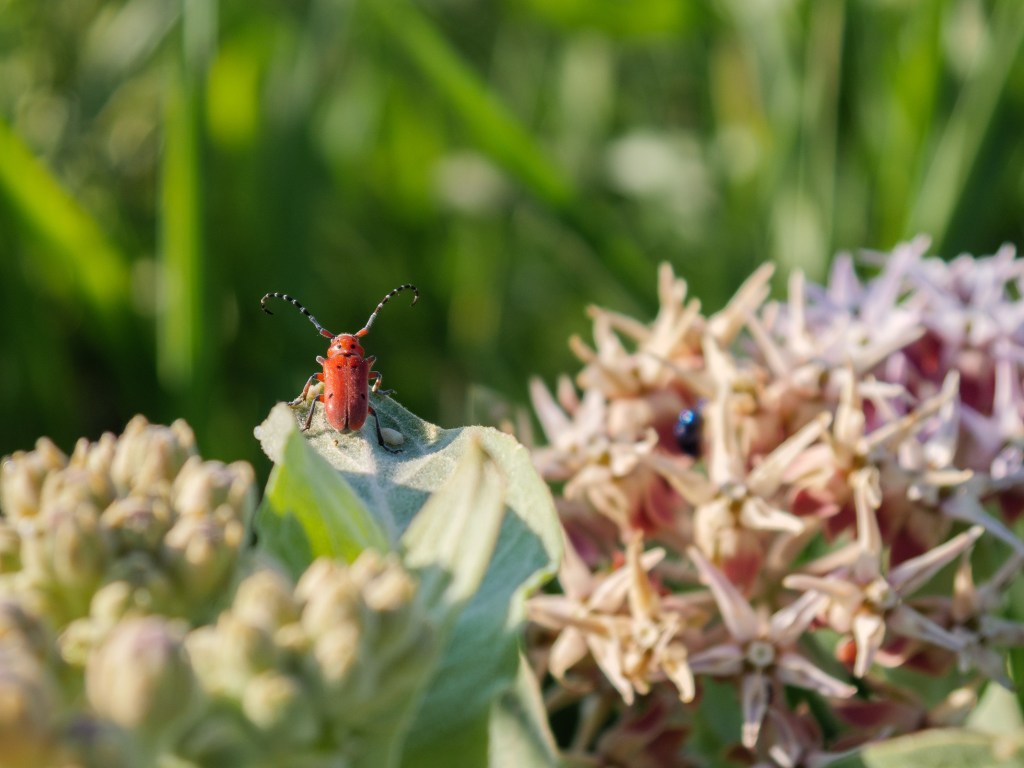
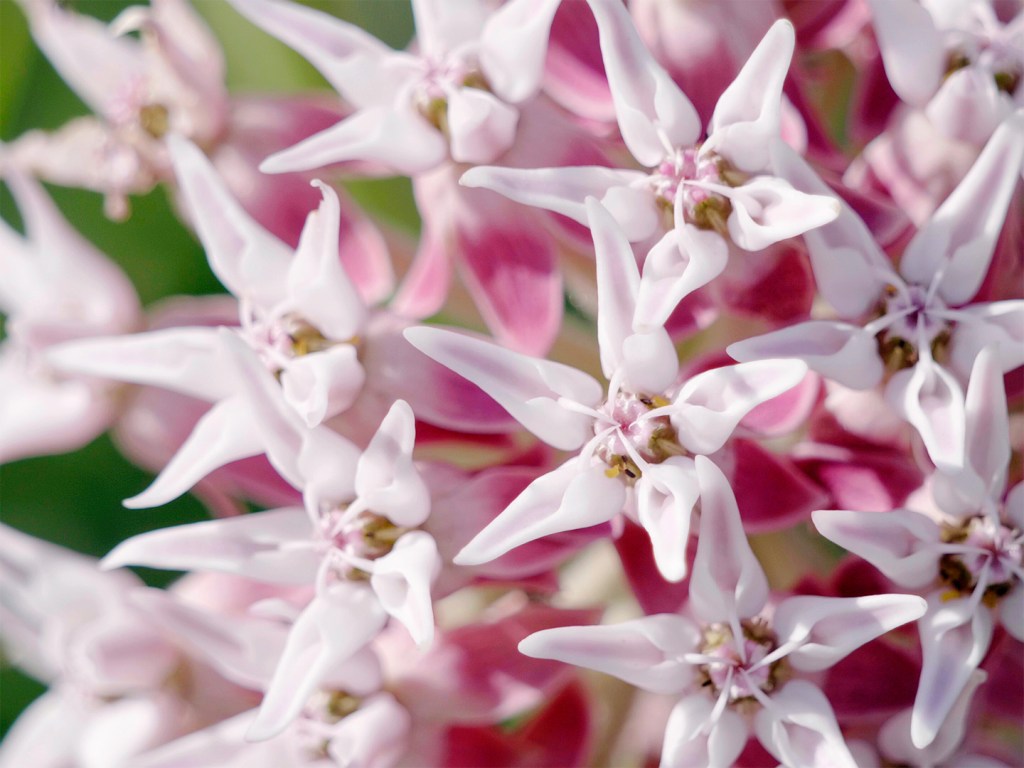
While milkweed plants are well-known as a host plant for the iconic Monarch Butterfly, they are also an excellent home for other invertebrates, such as the Cobalt Milkweed Beetle and the Red-femured Milkweed Borer. This species of milkweed is known as the Showy Milkweed, possibly because it sports beautiful bouquets of star-shaped flowers. However, just because something looks pretty doesn’t mean it is safe!

Most species of milkweed contain a toxic chemical that will harm whatever consumes it. In the case of these milkweed beetles, they have a special adaptation/design feature that allows them to eat milkweed without side affects! This immunity is caused by a protein in the beetle that prohibits the toxin from setting up shop at a molecular level. The Lord has provided mechanisms like this to help His creation thrive even in the fallen conditions of this world!
Plants would not have possessed toxins in God’s original, perfect creation, but because of Adam’s sin, all of creation is groaning and looking forward to the day when it will be set free.
“And to Adam he said, “Because you have listened to the voice of your wife and have eaten of the tree of which I commanded you, ‘You shall not eat of it,’ cursed is the ground because of you; in pain you shall eat of it all the days of your life; thorns and thistles it shall bring forth for you; and you shall eat the plants of the field.” – Genesis 3:17–18 (ESV)
“For the creation waits with eager longing for the revealing of the sons of God. For the creation was subjected to futility, not willingly, but because of him who subjected it, in hope that the creation itself will be set free from its bondage to corruption and obtain the freedom of the glory of the children of God. For we know that the whole creation has been groaning together in the pains of childbirth until now.” – Romans 8:19-22 (ESV)
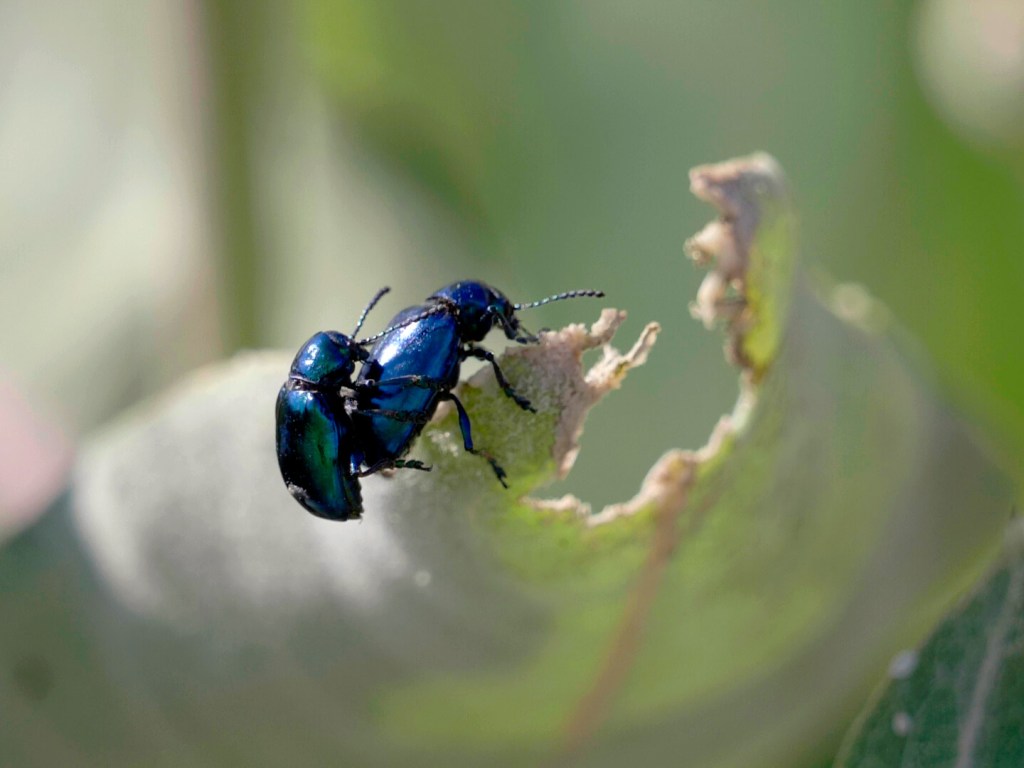
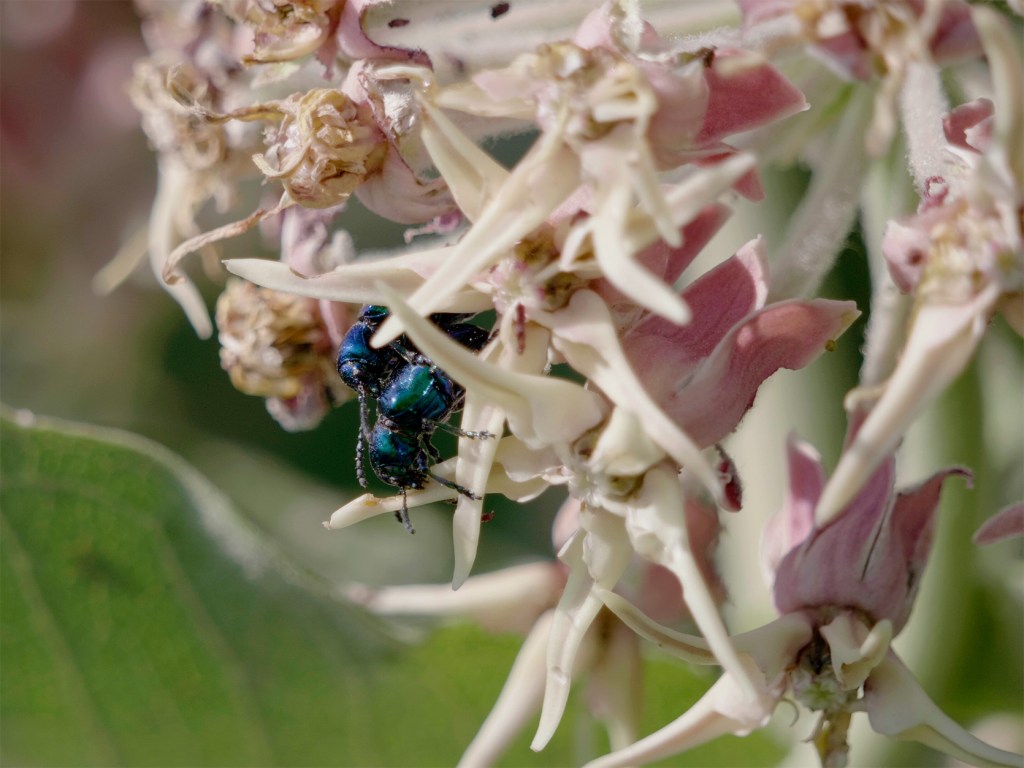
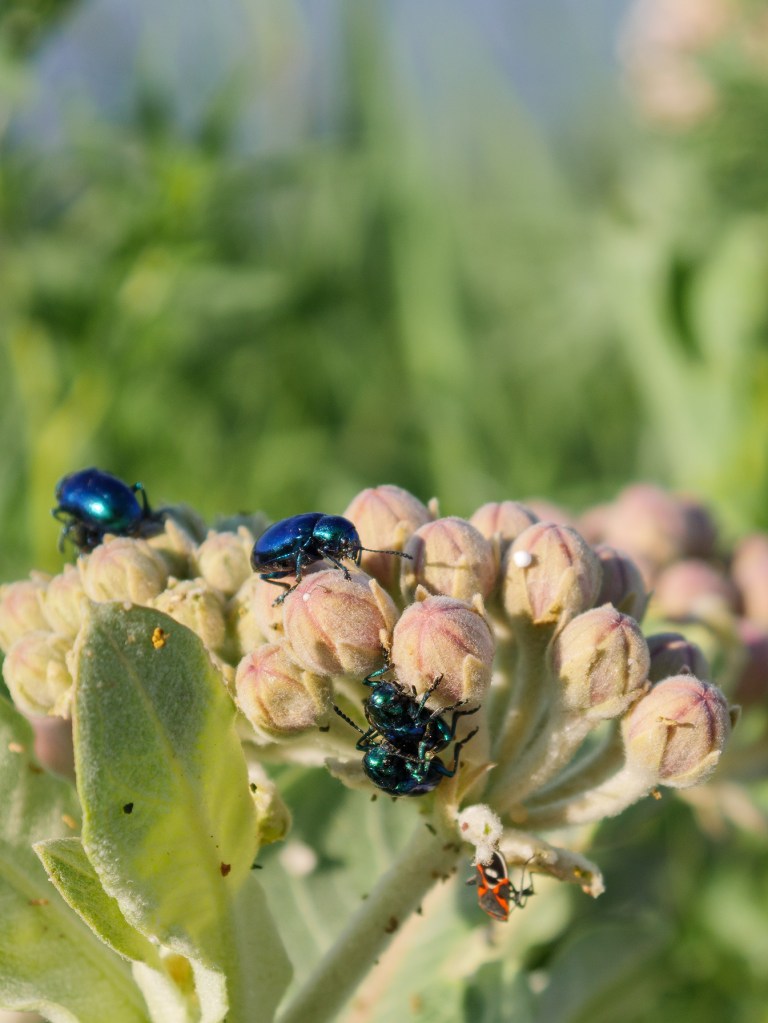
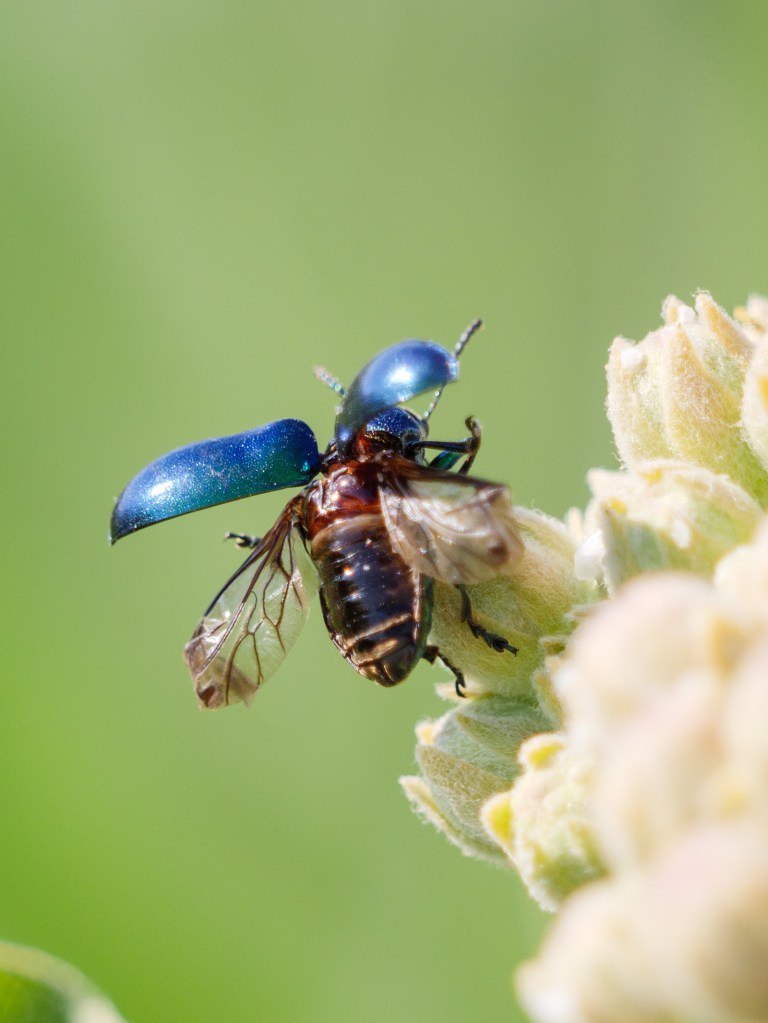
Cobalt Milkweed Beetle
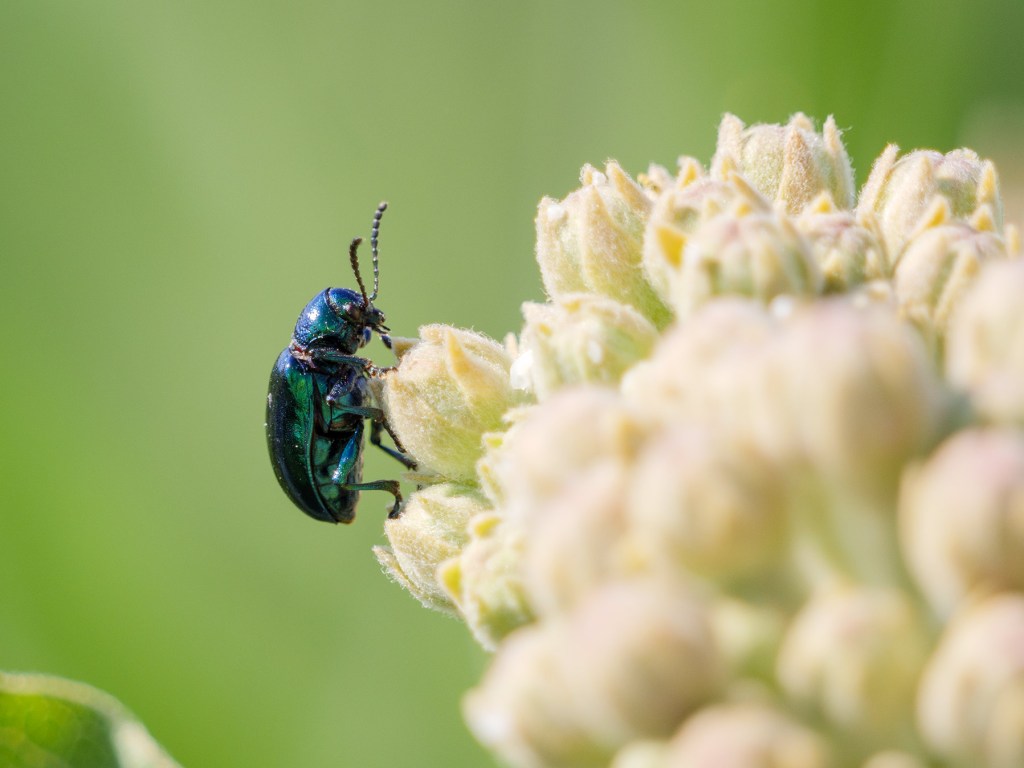
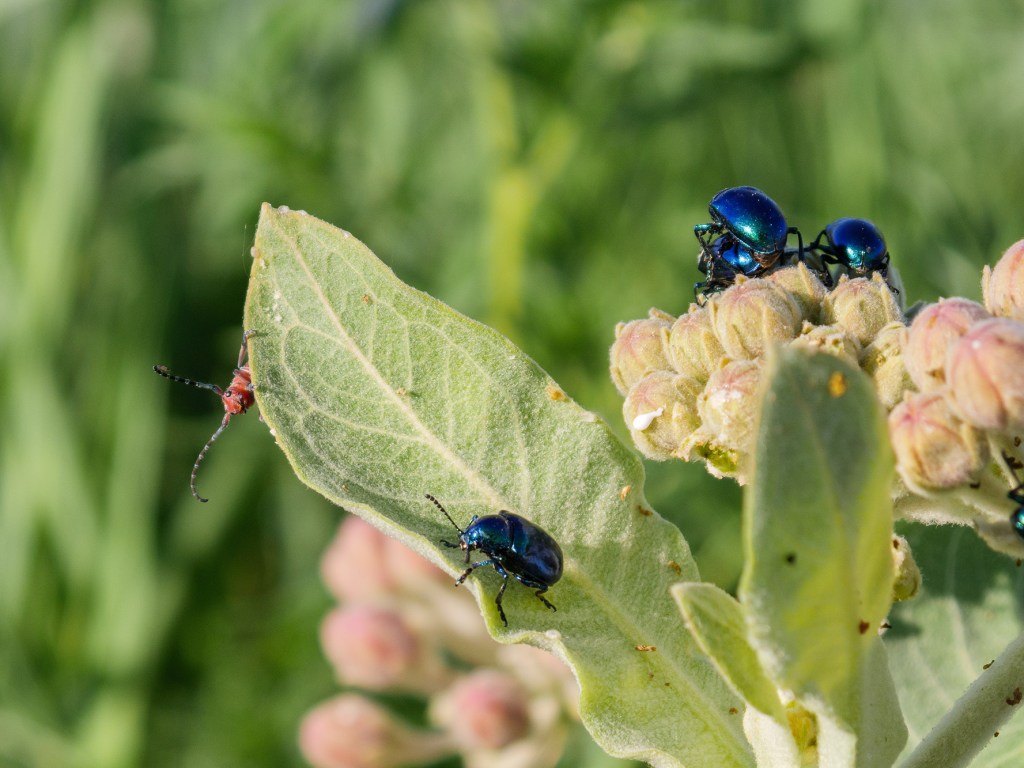
These small, shiny beetles are stunningly blue! The Cobalt Milkweed Beetle feeds on the leaves and flowers of milkweed plants in both their adult and larval stages. After mating, the male will catch a free ride on the female’s back for over an hour! Because of its “dangerous” diet, the Cobalt Milkweed Beetle is able to utilize the toxin that it consumes from the milkweed as a defensive secretion from several glands on its body. For a beetle that is slightly smaller than a honey bee, it has quite a few amazing design features!
Red-femured Milkweed Borer
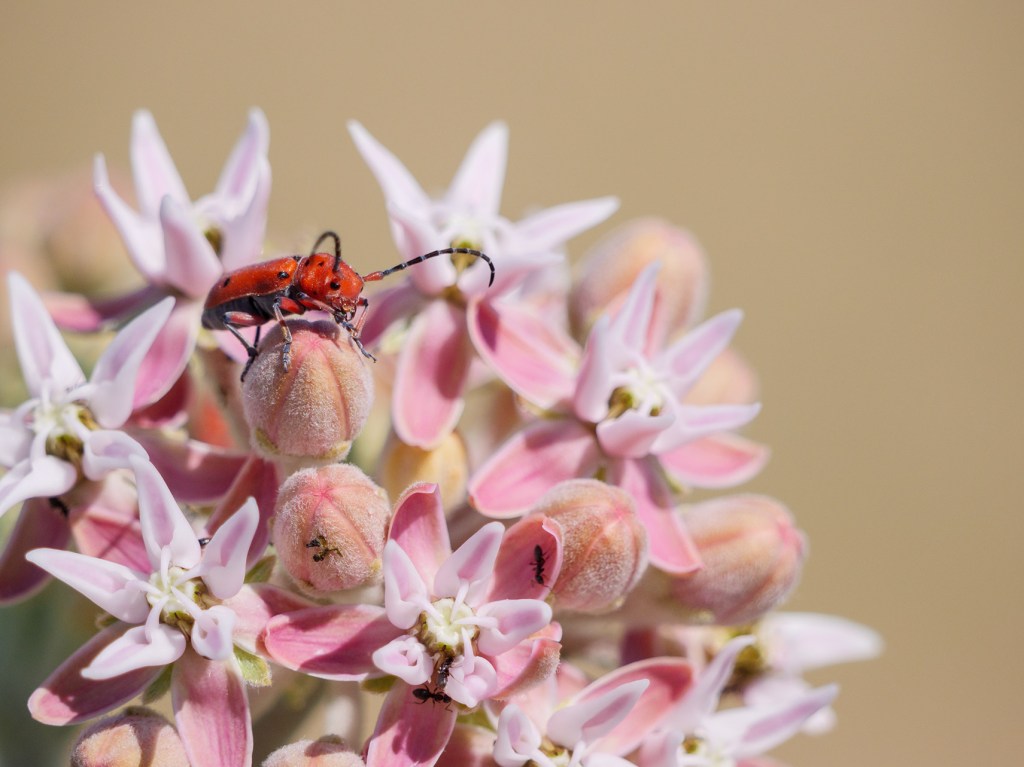
Does this beetle remind you of a Texas longhorn? Well, interestingly enough, Red-femured Milkweed Borers are classified as longhorned beetles! Their bright orange coloration is a signal to predators that they are toxic and should not be on the menu. The adult borers eat the leaves of the milkweed, but the larvae perform the species’ namesake activity: boring. Underground, the larvae will chew into the roots of the milkweed and reside there during the winter until they come out as adult beetles in the spring.
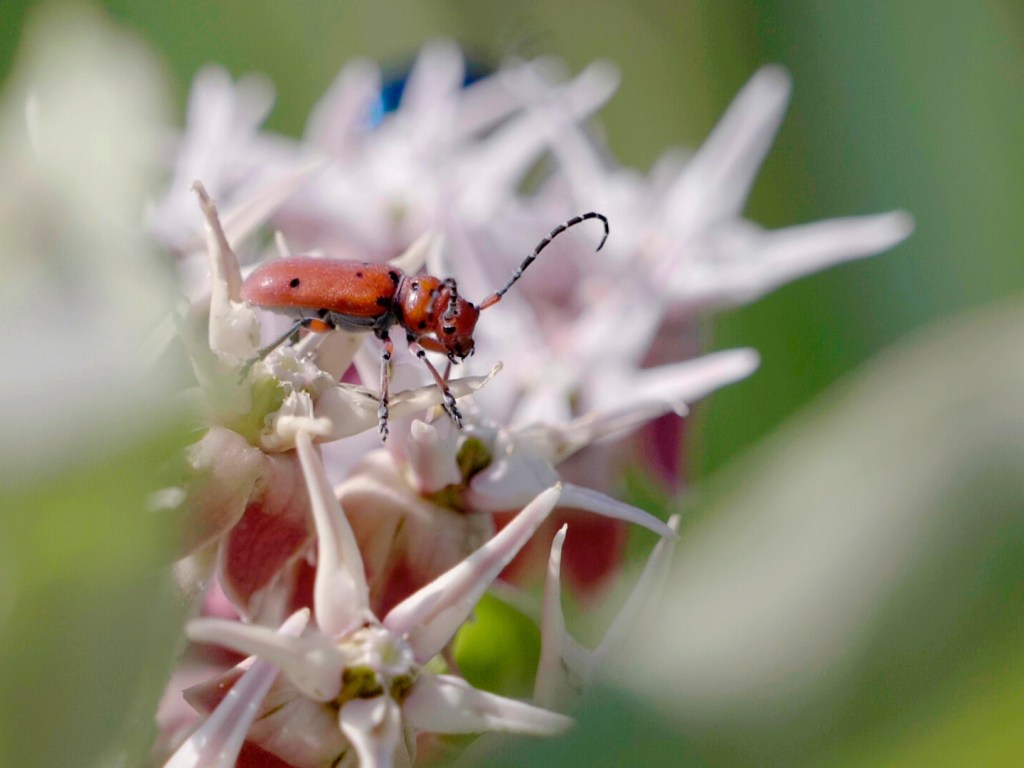
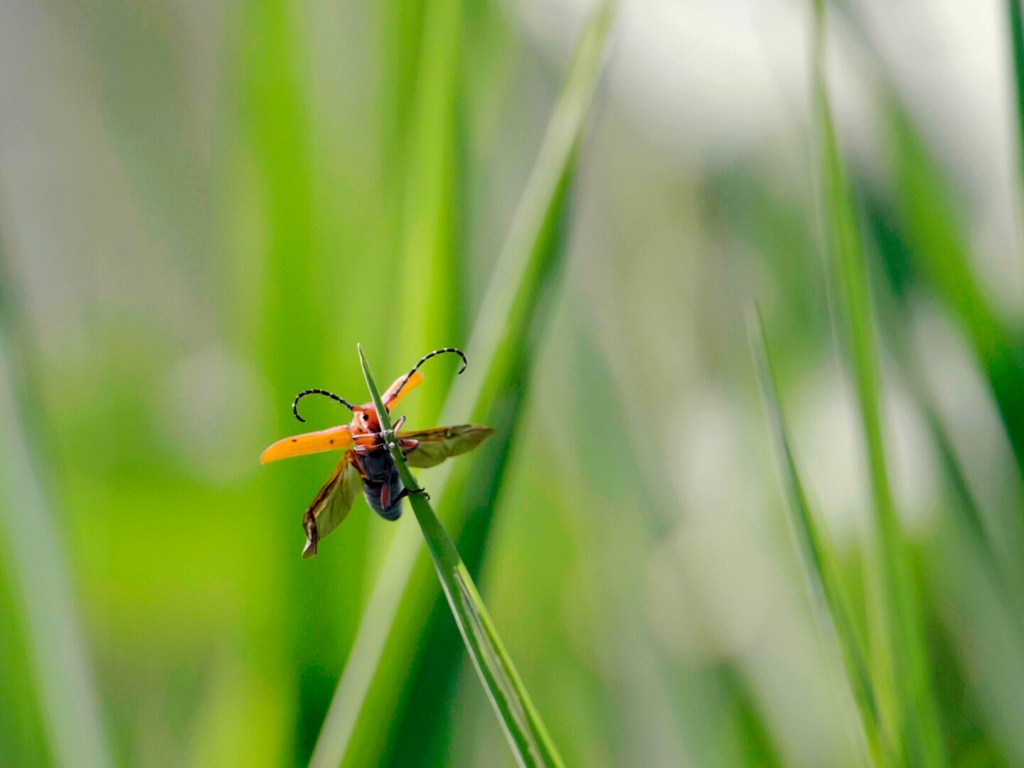
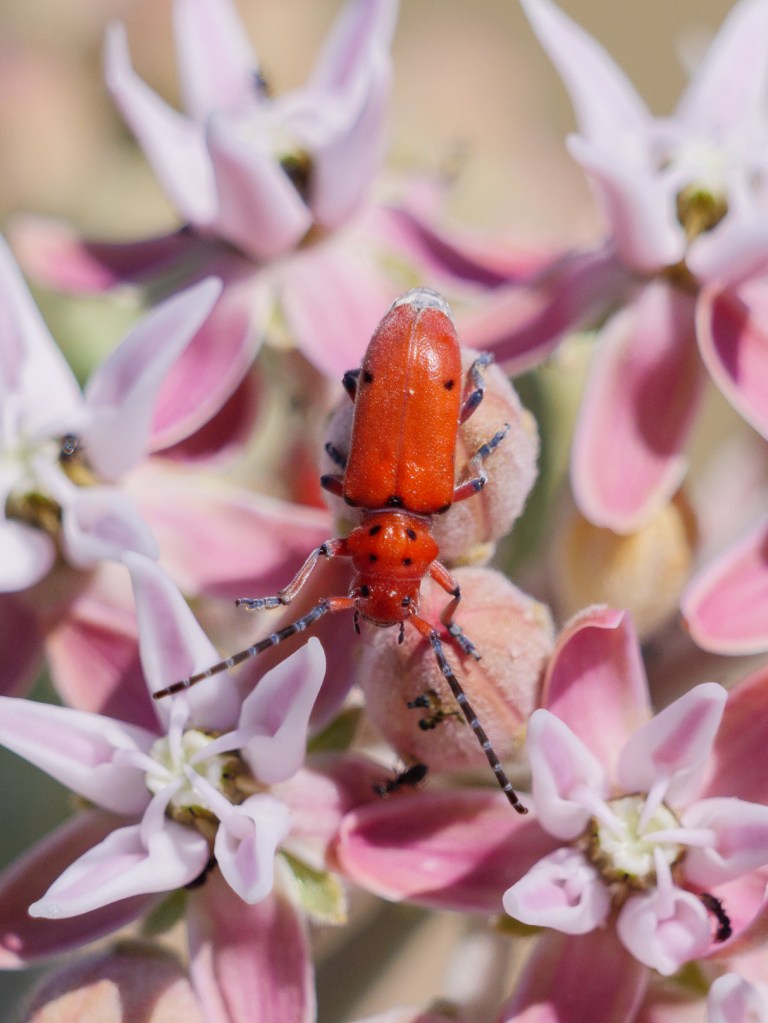
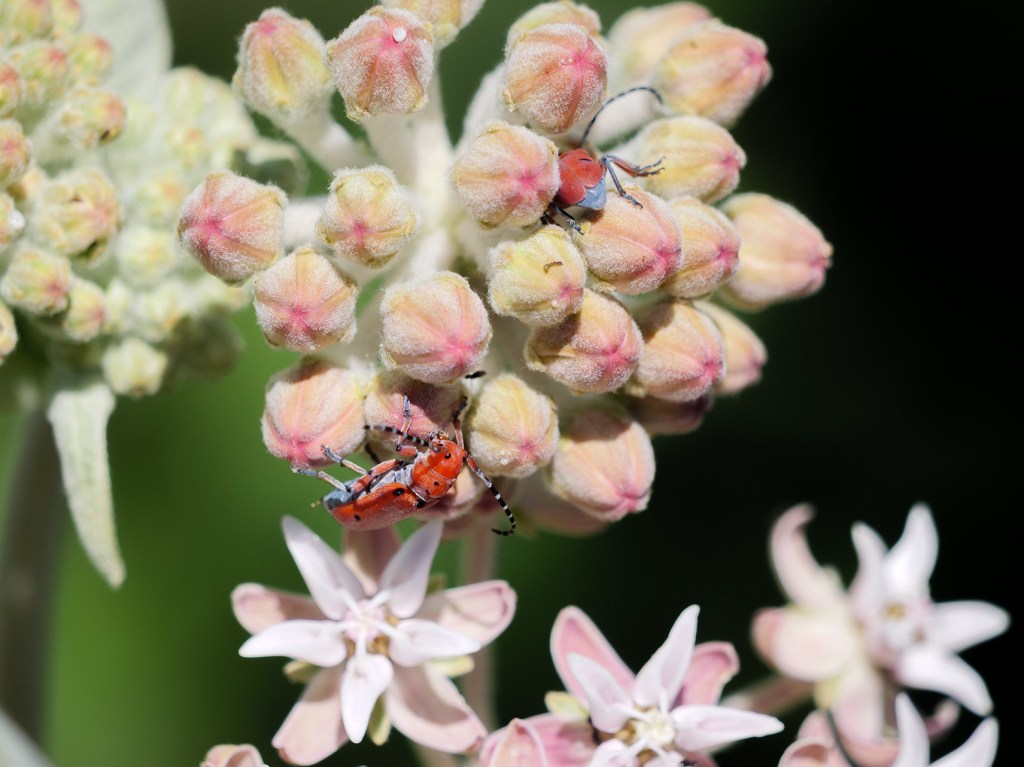
Make sure to look for milkweed and its residents when you explore God’s creation this summer!
Sources:
https://mdc.mo.gov/discover-nature/field-guide/milkweed-longhorns




Leave a comment