
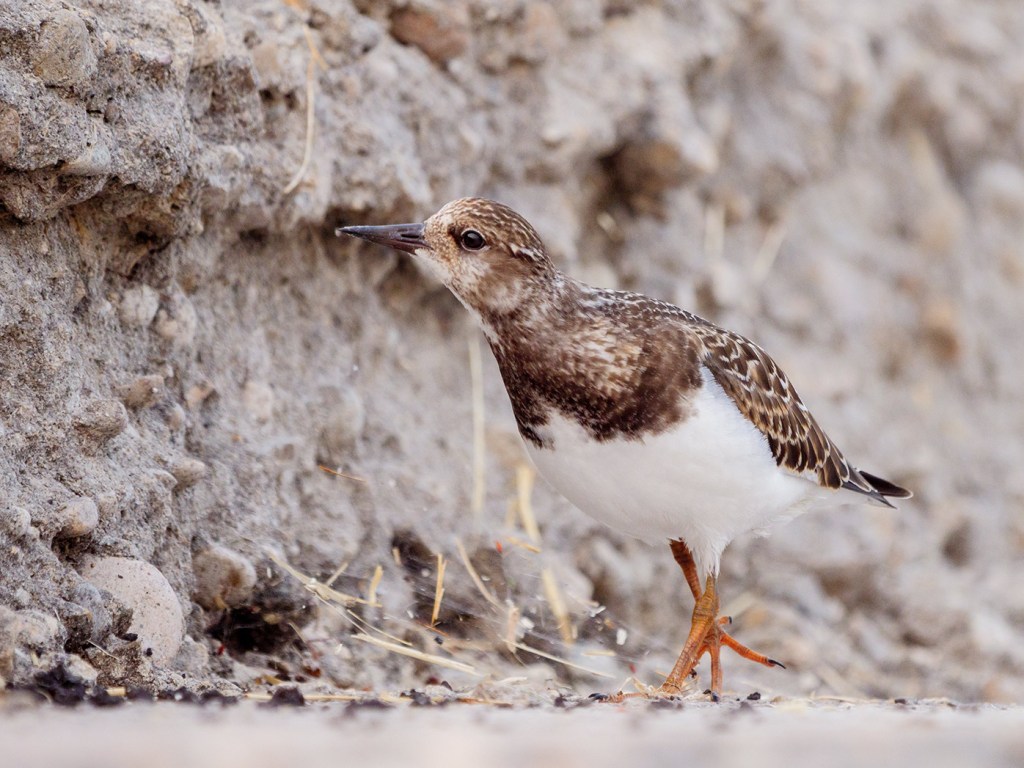
Late summer is a prime time to visit wetlands in search of migrating shorebirds! Many species are now making their return journeys from the far North to their wintering grounds in the southern portion of North America. In this post, we will learn about a few different members of this diverse bird family!
Dunlin
Calidris alpina
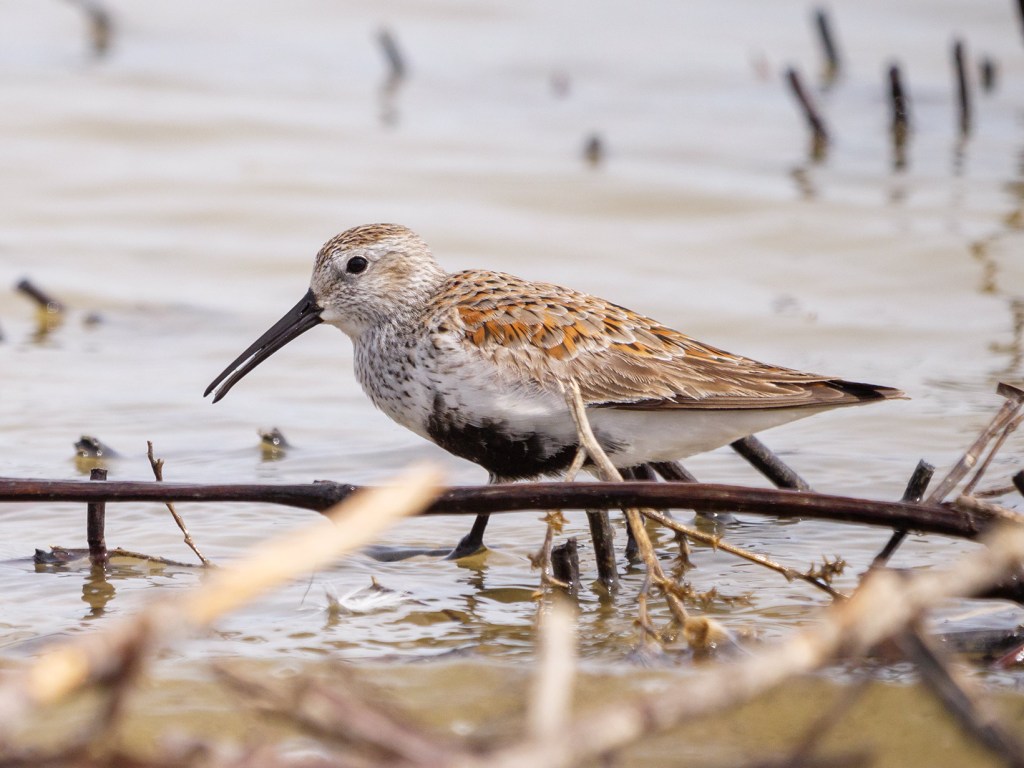
The Dunlin shown above is partially arrayed in its breeding plumage, which is rather striking when it is complete. This shorebird’s Sunday Best consists of orange feathers on its back and a patch of dapper black on its belly. In the nonbreeding season, the Dunlin has much duller coloration, and that is the origin of its name.
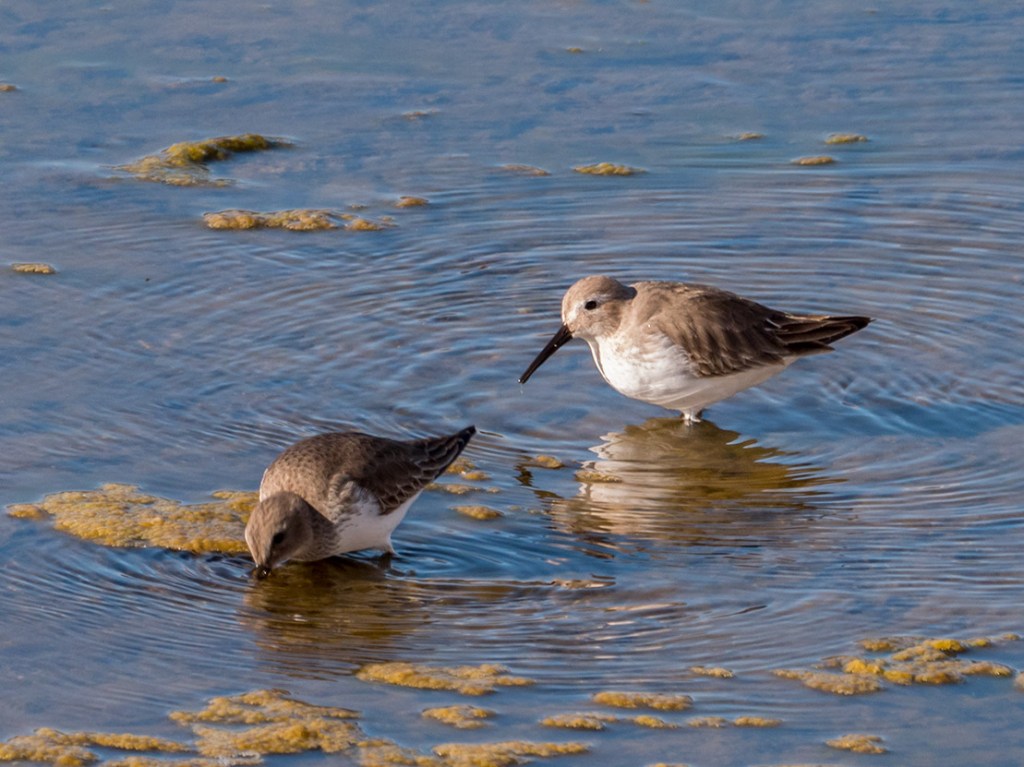
Hearkening back to the 1530s, the name “dunlin” comes from the English “dunling”, which roughly meant “little brown thing.” And during the birds’ winter season, that is kind of what they look like!
Dunlin breed in Artic tundra regions during the summer, and then migrate around 3,000 miles to the coastal areas of southern North America (and other places around the world) for the winter. That’s a long journey for a little bird! Along the way they will often stop to feed at shallow, inland water sources like ponds, lake shores, or muddy areas.
Ruddy Turnstone
Arenaria interpres
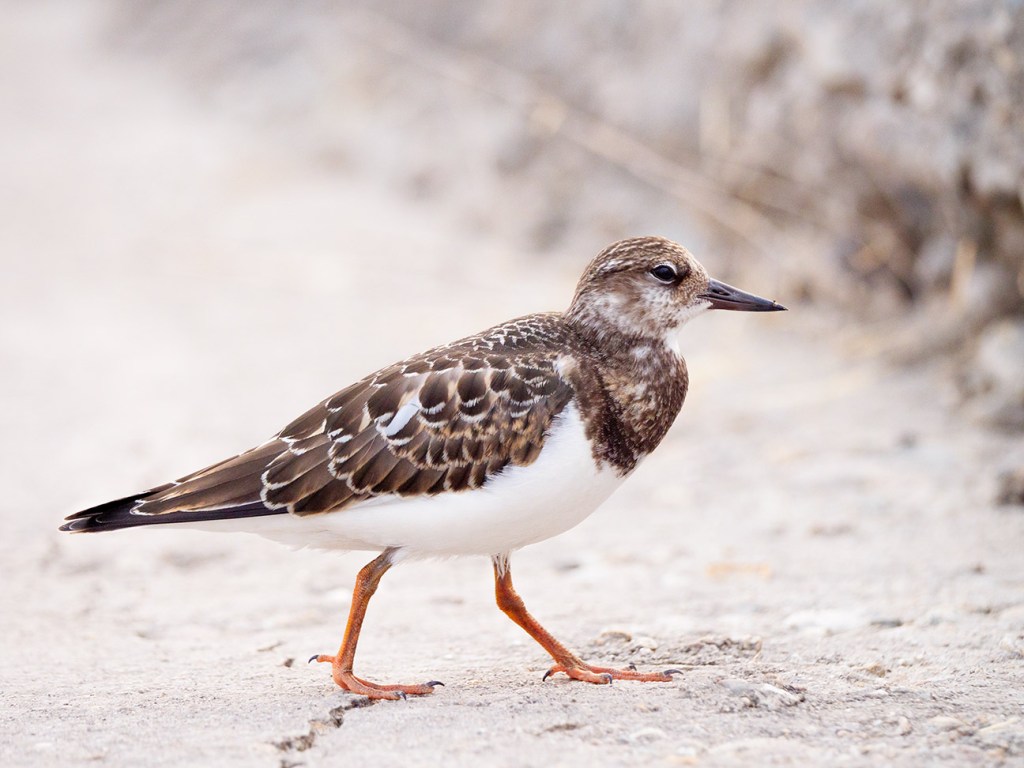
Another shorebird of coastal areas, the Ruddy Turnstone may not look like much in its nonbreeding plumage, but it is a show-stopper in the summer!
Similar to the Dunlin in its naming convention, the Ruddy Turnstone is named after its orange breeding plumage and its habit of turning over stones or other items while it is foraging for food along beaches. It mainly eats insects during the breeding season, but throughout the winter it is less picky about what it eats, scavenging for whatever may be available. This stout shorebird has a very similar life style to the Dunlin, in that it also breeds in the far Arctic tundra and winters along southern coasts; however, it can be found around the world on every continent except for Antarctica! The Ruddy Turnstone doesn’t migrate inland very often, so it can be a treat to see one if you don’t live near the coast!
Killdeer
Charadrius vociferus
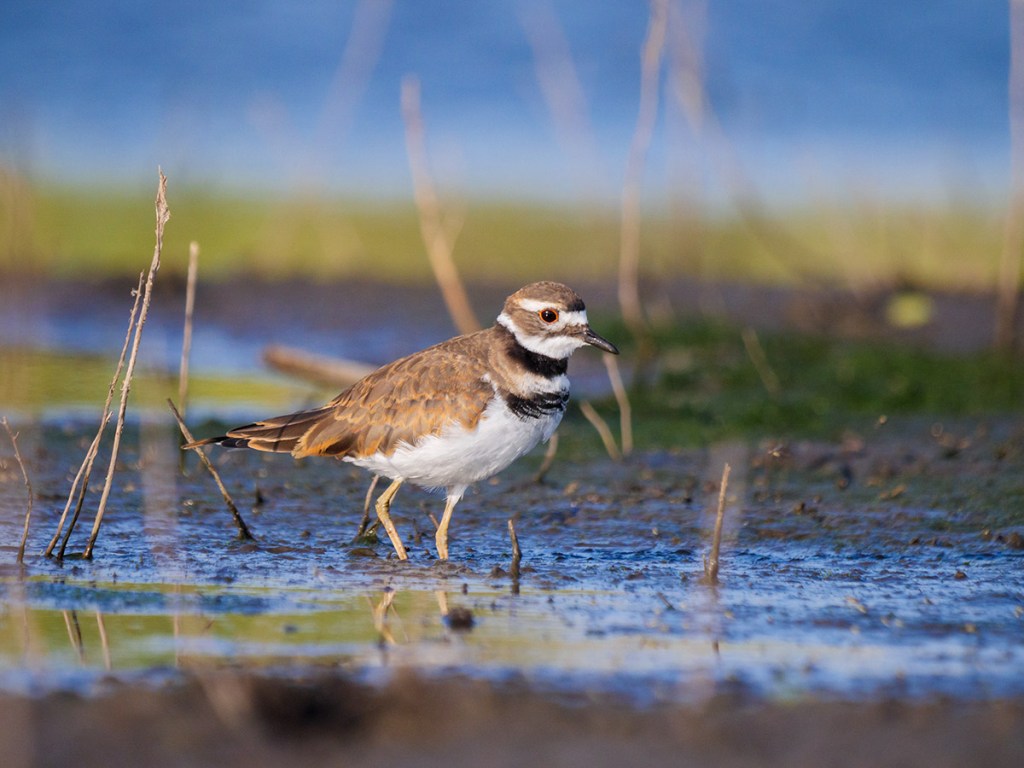
If you live in North America, you’ve probably seen a Killdeer. Although they are rather common (perhaps the most well-known shorebird), they still have some special features that make them unique!
Killdeer derive their name from their call, not from any malice of theirs towards deer. But, if for some reason a deer wanders too close to a Killdeer’s nest, the shorebird will do its best to scare off the intruder!
You may have heard of another tactic for nest protection: the adult Killdeer’s broken wing display. If a predator comes near the nest or offspring of a Killdeer, the adult will feign a broken wing and make pitiful chattering calls to lure the enemy away, tempting them to investigate a potentially easier meal. Unfortunately, this act has little effect on humans. Nevertheless, Killdeer are still quite abundant and their population is doing well overall!
Why Are Shorebirds Important?
Since there are around 350 species of shorebirds worldwide, this represents only a small sampling of the variety within this family of birds. Because many shorebirds are medium- to long-distance migrants, they must eat a lot of food before they take off on their journeys. Thus, they all play an important part in the food chain by helping to regulate the insect/invertebrate populations in the wetland areas where they live.
As stewards of God’s creation, we can help ensure that shorebirds have hospitable habitat for nesting during the summer and recovering during the winter. National wildlife refuges and wildlife management areas often have ideal wetland habitat for shorebirds, so visit a location near you to see what species you can find and how you may be able to help those facilities care for the land!
And God blessed them. And God said to them, “Be fruitful and multiply and fill the earth and subdue it, and have dominion over the fish of the sea and over the birds of the heavens and over every living thing that moves on the earth.”
References:
All About Birds and Birds of the World pages for Dunlin, Ruddy Turnstone, and Killdeer.




Leave a reply to Colleen Cancel reply